Hire Fire Show in Hong Kong: Cost, Permits and Venue Rules
Booking a fire show in Hong Kong comes down to one question before anything else: does the venue allow open flame. Most hotel ballrooms do not, because of sprinkler systems and fire codes, so fire shows here are usually staged on rooftops, outdoor terraces, yacht decks, beach venues or at events with written sign off from both the venue and the relevant fire authority. A typical set runs 10 to 15 minutes. Book 6 to 10 weeks ahead so there is time for permit checks, performer visas and a technical site visit.
Contents
- When to book a fire show in Hong Kong
- What a fire show set actually looks like
- Fire performance and Hong Kong venue rules
- Venue types that work
- Flights, work permits and event visas
- Technical rider and stage requirements
- How fire show pricing is built
- FAQ
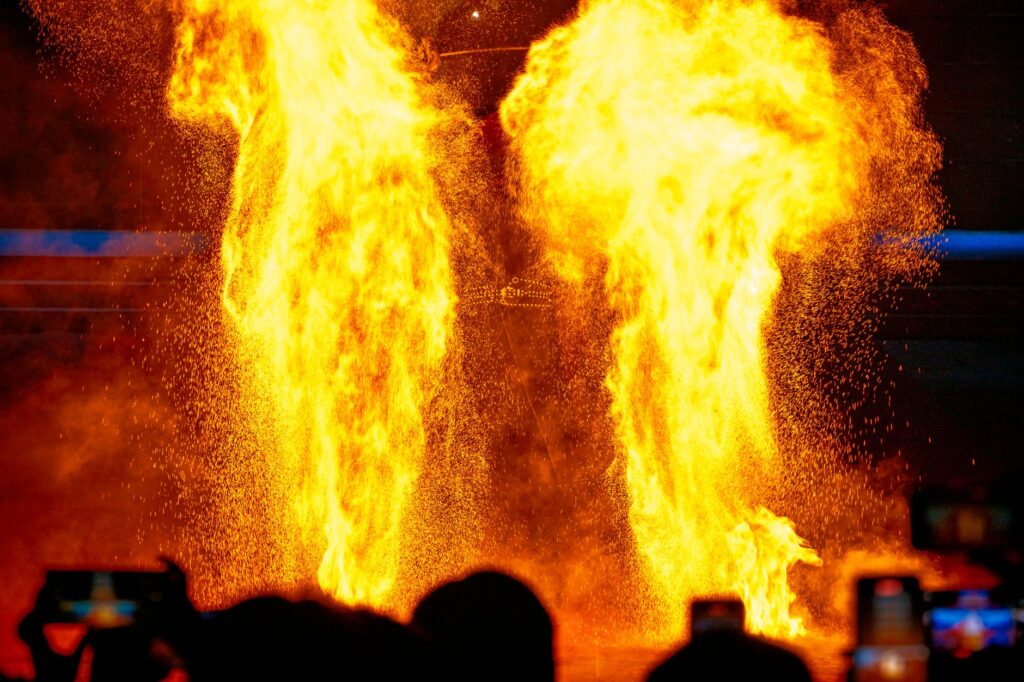
When to Book a Fire Show in Hong Kong
Fire shows work best for evening events where the flame itself is part of the visual, so galas, yacht parties, product launches, outdoor weddings and rooftop corporate nights are the natural fit. They are a weaker choice for daytime events or brightly lit indoor rooms where the flame does not read against the background.
Hong Kong's wet and typhoon prone months, roughly June through October, add real risk for outdoor fire acts. Wind affects flame control and flying debris is a safety issue for performers working with open flame props, and a typhoon signal can force a last minute venue change or cancellation. If your event sits in this window, build a wet weather or indoor backup plan into the contract from the start, not as an afterthought two weeks out.
Lead time matters more for this act than for most others. A DJ or magician can often be confirmed inside two to three weeks. A fire show needs venue confirmation that open flame is permitted, a safety plan agreed with the venue's fire officer or facilities manager, and in some cases a permit application with processing time attached. Six to ten weeks out is a realistic minimum for an event of any size. Shorter timelines are sometimes possible but narrow your venue options to spaces that already have flame approval on file.
What a Fire Show Set in Hong Kong Actually Looks Like
A standard booking is a solo or duo performer doing a 10 to 15 minute choreographed set with props such as fire staff, fans, hoops, poi or fire swords, timed to a music track. Larger budgets can extend to a trio or small troupe with a longer, segmented set that mixes fire with LED or glow elements for the parts of the evening where flame is not permitted or not visually practical, such as inside a tented structure.
Most professional sets include a short non-fire warm up segment using the same props unlit or in LED mode, which also doubles as a safe option if the venue's fire officer restricts the flame portion on the night. A safety crew member with a fire blanket and extinguisher is standard on any professional booking and should never be treated as optional, regardless of how experienced the performer is.
Many clients pair the fire show with a DJ to control music timing and transitions, or with a live band for the reception before the flame segment begins. Our DJ booking guide for Hong Kong and live band hiring guide for Hong Kong cover how that pairing is usually priced and scheduled.
Fire Performance and Hong Kong Venue Rules
This is the part most first time bookers skip, and it is the part that causes cancelled shows. Hong Kong's fire safety codes are strict and most indoor commercial venues, hotel ballrooms especially, are fitted with sprinkler systems and smoke detection that make open flame indoors a non starter without significant, venue specific sign off that is rarely granted. Treat "indoor ballroom" and "fire show" as incompatible until the venue's own fire officer or facilities team tells you otherwise in writing.
Outdoor and semi outdoor spaces are a different conversation. Rooftops, open terraces, yacht decks and beach venues can often host a fire performance, but "often" is doing real work in that sentence. The venue operator, and in some cases the marina authority for a yacht, will want a written safety plan: clearance distance from guests and structures, a standby fire extinguisher and fire blanket, confirmation of non flammable ground surface or a protective mat, and sometimes a dedicated standby safety crew member separate from the performer. Some districts or venue types may also require formal notification to the fire authority ahead of the event. None of this is standardised across every venue in the city, so confirm requirements with the specific venue and with your agency rather than assuming last year's event at a different location sets the precedent.
Alcohol service near the performance zone is another point venues raise. Spilled drinks and open flame close together is an obvious hazard, so expect the venue to ask for a buffer zone or a pause in bar service to that area during the set.
| Venue Type | Open Flame Typically Allowed | Common Workaround |
|---|---|---|
| Hotel ballroom (indoor) | Rare, blocked by sprinklers and fire code | LED or glow show instead of flame |
| Rooftop terrace or function space | Often possible with venue and safety sign off | Standby fire safety crew required |
| Yacht deck | Case by case, depends on vessel and marina rules | Confirm with captain and marina authority directly |
| Beach venue or open air private space | Usually possible with a safety plan | Fire blanket, extinguisher and marked clearance zone |
| Convention centre hall | Rare | LED fire alternative or static prop display |
Venue Types That Work: Rooftops, Yachts, Beach Spaces and Open Terraces
Hong Kong gives you a wider choice of flame friendly outdoor spaces than most Asian cities, simply because the terrain creates so many natural terraces, harbourfront decks and hillside venues. Rooftop function spaces attached to hotels or private clubs, yacht back decks departing from the harbour, and beach clubs around areas like Sai Kung, Repulse Bay or Stanley are the categories clients ask for most. We deliberately are not naming specific venues here, because flame policy at any individual address can change between events, between management teams, and between seasons. Always get the current answer in writing for your date, not a general impression from a past event.
If the venue turns out to be flame restricted after all, the two most common pivots are an LED or glow prop version of the same choreography, or swapping the segment for a different visual act entirely. A magician or close up act works well for an indoor cocktail hour where a fire show cannot, and our guide to hiring a magician in Hong Kong covers that option in detail if you need a backup plan built into the contract.
Flights, Work Permits and Event Visas for International Performers
A performer being paid to work in Hong Kong is doing paid employment under Hong Kong immigration rules, which generally means a work visa or employment visa arrangement rather than entry as a tourist, even for a single evening's performance. This is arranged through a local sponsor, typically the booking agency or the event organiser, and the process commonly takes two to six weeks depending on the performer's nationality and the completeness of supporting documents. Confirm current timelines and requirements with the Hong Kong Immigration Department or your booking agent well before locking the date, because processing times do shift.
Flights are usually booked in economy or premium economy for shorter regional routes and business class for long haul performers flying from Europe or the Americas, since arriving rested matters for an act built around precise flame control. Build in at least one full day on the ground before the event for the performer to rest, do a site walk through, and run a safety check with venue staff.
Technical Rider and Stage Requirements for a Fire Show
The physical requirements are simpler than a band's rider but less negotiable. The performer needs a clear performance zone with enough overhead clearance for raised props, a surface that is not slippery and ideally not synthetic carpet that can melt or scorch, and a minimum clearance distance from the nearest guest, table or structure that the performer will specify based on the props used. Overhead sprinkler heads and smoke detectors directly above the performance zone need to be identified and, where the venue requires it, isolated or covered for the duration of the set only, with facilities staff present to restore them immediately after.
A fire blanket and extinguisher on site, operated by a crew member who is not the performer, is standard and should be written into the contract rather than assumed. Outdoors, wind speed on the night is the performer's call, not the planner's, and a professional act will have a clear threshold at which they switch the segment to the unlit or LED version for guest safety. Power needs are minimal, usually just a sound feed for music, with a generator backup specified for yacht or beach locations without reliable mains power.
How Fire Show Pricing Is Built in Hong Kong
There is no fixed market price because every booking is assembled from several separate costs, and asking for a flat number before giving your date, venue and set length will only get you a rough placeholder. What you can control is understanding which components move the number up or down.
| Component | What Changes It | Typical Impact |
|---|---|---|
| Performer fee | Number of performers, set length, skill tier | Low to high |
| International flights | Origin city, number of performers, season | Medium |
| Accommodation | Number of nights, hotel category | Low to medium |
| Local per diem | Number of days on the ground | Low |
| Local safety or fire crew | Required for most outdoor permit sign offs | Medium |
| Insurance | Public liability cover for open flame performance | Low to medium |
| Permit or application costs | Depends on venue and district requirements | Low to medium |
As a rough shape rather than a quote: a single international performer doing one 10 to 15 minute set generally lands somewhere in the low to mid four figure range in US dollars once flights and accommodation are included, with duo or trio acts, longer sets, or additional safety crew pushing that up. Treat this as a planning range, not a quote, and request a written proposal once you have a confirmed date and venue.
The single most expensive mistake is confirming a fire show with a performer before confirming with the venue, in writing, that open flame is actually permitted for your event date. Deposits for international performers are usually non refundable once flights are booked, and a venue refusing flame permission two weeks before the event leaves you paying for a show you cannot stage, with no time left to source and brief a replacement act properly.
Get flame approval first, in writing, then confirm the performer. It is a ten minute phone call that can save the entire budget.
If you are planning entertainment across more than one market, our pages on booking entertainment in Dubai and our why choose us page cover how we handle multi city logistics, visas and local compliance for the same event series.
FAQ
Is fire performance legal in Hong Kong?
Yes, fire performance is legal in Hong Kong, but it is tightly constrained by venue and fire safety rules rather than being freely permitted anywhere. Indoor venues with sprinkler systems typically prohibit it. Outdoor and rooftop venues can often host it with a written safety plan agreed in advance. Always confirm directly with the venue and, where applicable, the relevant fire authority for your specific location and date.
Can you do a fire show indoors in Hong Kong?
Rarely. Most indoor commercial venues in Hong Kong, including hotel ballrooms, have sprinkler systems and smoke detection that make open flame indoors impractical or outright prohibited. The usual solution is an LED or glow prop version of the same choreography, which keeps the visual impact without the flame, or moving the segment to an outdoor terrace attached to the same venue.
How long does a fire show last?
A standard fire show set runs 10 to 15 minutes for a solo or duo performer. Longer events sometimes book a full troupe with a segmented 20 to 30 minute set that mixes fire with LED elements, or multiple shorter sets spaced through the evening rather than one continuous performance. Confirm set length with your agency when booking since it directly affects the fee.
Do fire performers need a visa to work in Hong Kong?
Yes. A performer being paid to work in Hong Kong needs a work visa or employment visa arrangement, not a tourist entry, even for a single event. This is arranged through a local sponsor, usually the booking agency or organiser, and typically takes two to six weeks depending on nationality. Confirm current processing times with the Hong Kong Immigration Department or your agent well ahead of the event date.
What happens if the venue says no to open flame at the last minute?
A professional booking should already include a non fire backup, usually the same choreography performed with LED or unlit glow props. This is why confirming flame permission with the venue in writing before booking the performer matters so much, since it gives time to agree the backup plan rather than scrambling for one days before the event.
How far in advance should I book a fire show in Hong Kong?
Six to ten weeks is a realistic minimum. This allows time to confirm the venue's flame policy in writing, agree a safety plan with the venue's fire officer, process the performer's work visa, and complete a technical site visit before the event date. Shorter timelines are sometimes possible at venues that already have flame approval on file, but narrow the options available to you significantly.
What space does a fire show need?
The exact clearance distance depends on the props used, fire staff and poi need more overhead and lateral space than fire fans, but as a general rule the performer needs a clear zone free of guests, tables, décor and overhanging structures, on a non slippery surface that will not scorch or melt. The performer or agency will confirm the exact dimensions once they know which props are being used for your set.